NDWOMARA · INSTALLMENT 01: The Song Origin Myth
Listen to the story
We got to the high stone place as an exhausted few, coming from lands where we were the ones disgustingly different—intolerable and unwelcome in the places we fled.
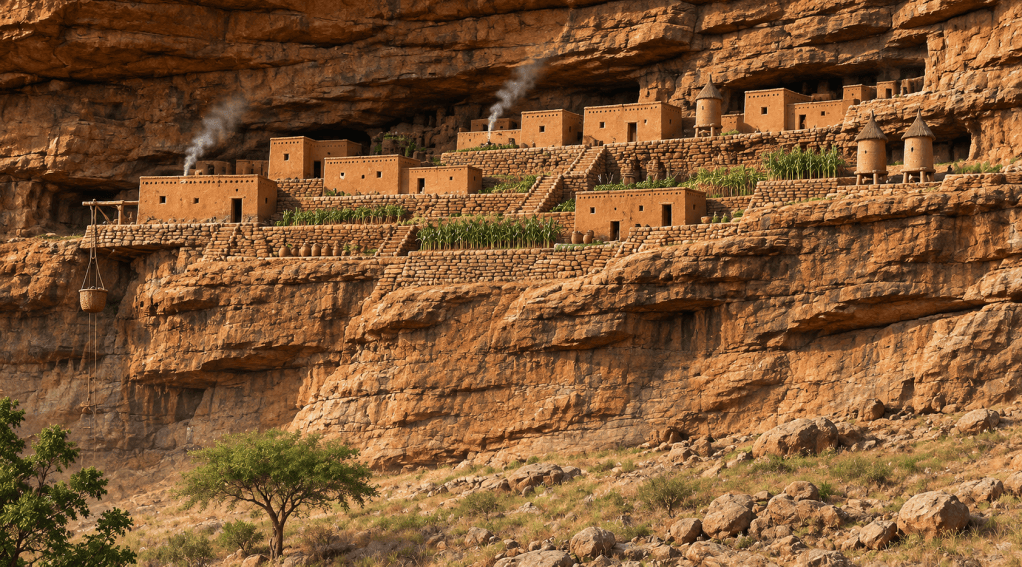
From the ground, the cliffs appeared to rise sharply, as if they burst forward from brown dirt and gravel into hard, jagged stone. The Azri people were so well hidden in the cliffs, we almost passed, assuming the caverns too inhospitable. Their homes were invisible from the plains below. If not for the light wisps of smoke that slipped out of cracks or the way light bent strangely at the cave mouths, we would have continued our tired journey as if nothing was there at all.
Once we were guided up through narrow stairways carved into the mountainous haven, we marveled at their ingenuities. They grew staple vegetables and crops along sharp terraces. They moved water and common goods among each other’s cave with ropes, pulleys, chutes, and buckets. They shared water. They shared salt. And they allowed us to make a home—its longevity up to us.
We were too tired to notice our weakening bond at first. The Azri were welcoming. No one was chasing any of us any longer—certainly not into the rocky, barren, seemingly inhospitable caverns the Azri used as camouflage for their cleverly designed abundance.
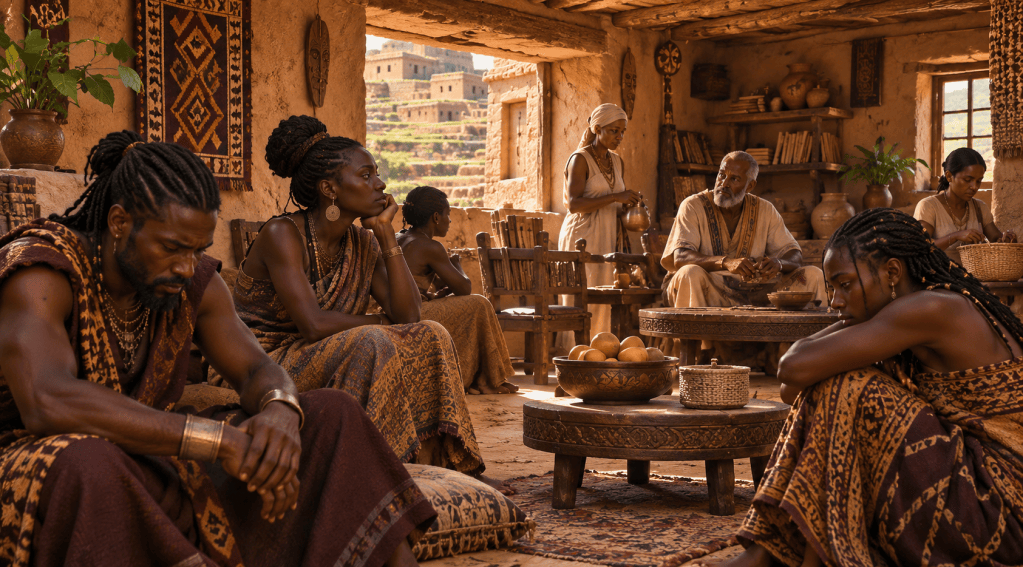
At first, it was subtle. Our voices became less melodic. We laughed less. Then we began to disagree more. Our misunderstandings increased as the hum in our chests began to fade.
We did not tell the Azri of it. We accepted it as the price of settlement in a new land. As we began to accept our disconnected fate, the Azri gave us the Song.
An Azri elder died.
We watched them quietly wrap the body in thin strips of pale linen, binding it reverently. Their tearless faces were steady and resolute as they lifted the body and began the small procession up the narrow stairs. They moved in silent, graceful rhythm up the jagged steps, carrying their sacred package as we stumbled behind them.
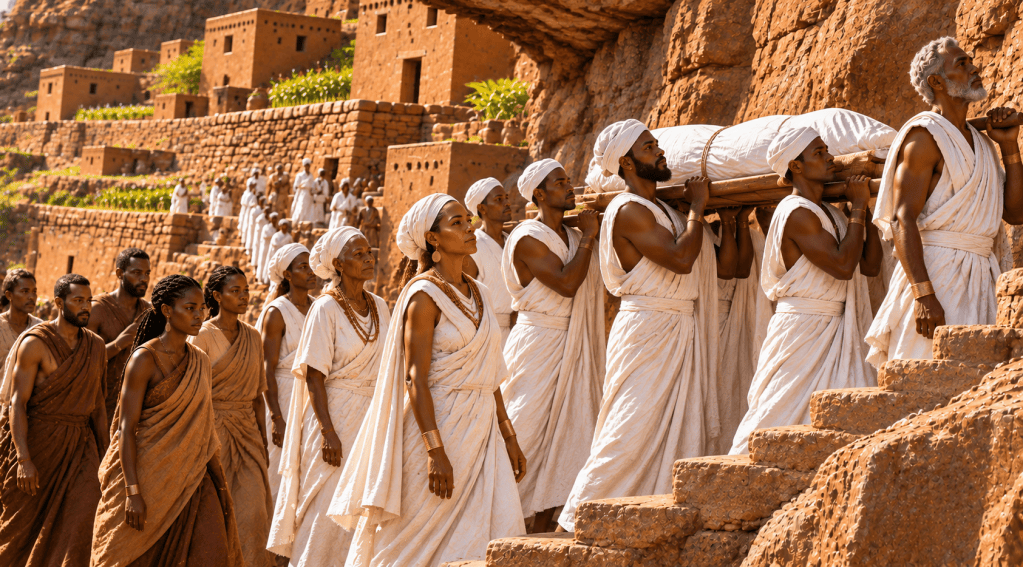
We had not been asked to come, nor forbidden. We were pulled upward.
The top cave opened wide, its mouth facing out across the valley. Light poured in, brightening the cave walls and revealing lines and spirals in repeated patterns etched across the stone. The procession ended with them placing their elder into a body-sized recess carved into the wall.
Then a woman stepped forward.
She climbed onto a small, dusty platform and began to sing. Her voice rose slowly, testing the echo of the surrounding stone. Others joined her, their harmonies bouncing across the cave. Hands began to clap. Fingers tapped against stone. Then feet stomped—each sound amplified at the cave mouth and carried across the valley.
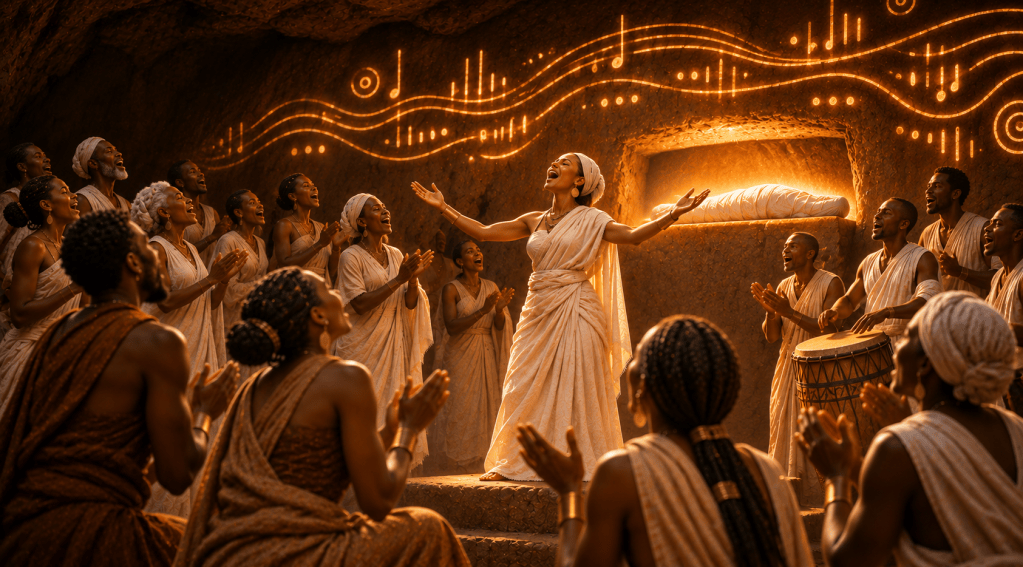
We felt the hum in our hearts grow back its strength in a warm rush. We looked at one another, feeling our bond return in force. All our recent misunderstandings, miscommunications, and misalignments dissolved into our feet as we joined the dance. The markings on the wall revealed themselves as lyrical patterns and distinct rhythms.
We understood. So we sang too.
The recess began to glow, and we all sang louder and stomped harder until voices were hoarse and our bodies gave out from the splendor. When the singing ended, the recess was empty.
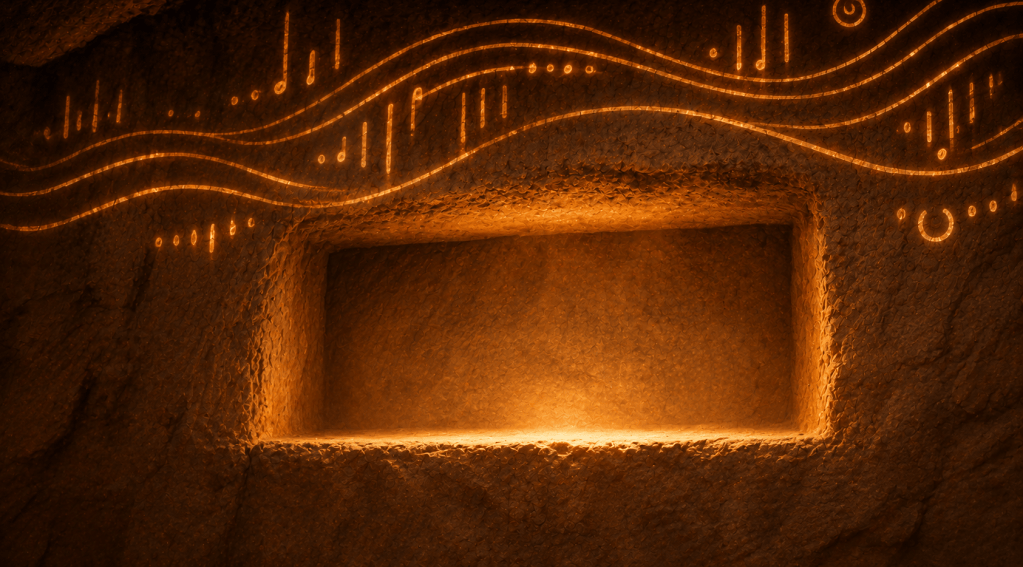
The Azri did not speak of it afterward. Nor did we. We had been given a sustaining gift. We were grateful. And we continued our journey to find a home where our Song could thrive.
Continue reading: Installment 02 · Establishment of Ndwomara →

